A legatus legionis was the commanding officer of a Roman legion, a position equivalent to a modern brigadier general or lieutenant general. Usually appointed by the Emperor from the senatorial class for a 3–4 year term, they had absolute authority over their legion.
 | The term legatus was was formalized under Augustus as the officer in command of a legion. The Legatus legionis held complete authority over a legion, often reporting directly to the provincial governor. (legatus Augusti pro praetore) From the Roman Republic, legates received a large share of the military's spoils at the end of a successful military campaign. This made the position of Legatus extremely lucrative, able to attract consuls or senators. In the 3rd century, Emperor Gallienus replaced these senatorial legates with experienced equestrian commanders. |  |
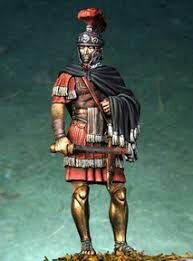
| | There were two main positions; the legatus legionis was an ex-praetor given command of one of Rome's elite legions. The legatus pro praetore was an ex-consul given the governorship of a Roman province. He held powers of a praetor, which in some cases included command of four or more legions. The legatus in the field would be recognized by his elaborate helmet and body armour, as well as a scarlet paludamentum (cloak) and cincticulus (a waist-band tied around the waist in a bow). A legatus legionis could and often did order punishments, including executions. |  |





No comments:
Post a Comment