Showing posts with label Gold of the Royal Cemetery of Ur. Show all posts

Wednesday, September 9, 2026

Gold of the Royal Cemetery of Ur

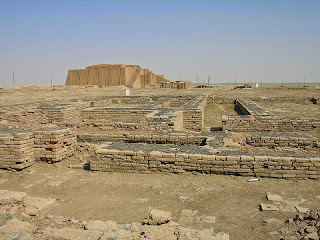
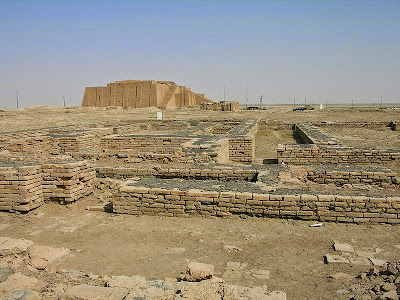
Ur was an important Sumerian city-state in ancient Mesopotamia, located at the site of modern Tell el-Muqayyar in southern Iraq.
Although Ur was once a coastal city near the mouth of the Euphrates on the Gulf, the coastline has shifted and the city is now inland, south of the Euphrates, 16 km (9.9 mi) from Nasiriyah.
The city dates from 3800 BC. According to one estimate, Ur was the largest city in the world from c.2030 to 1980 BC. Research indicates that the area was struck by severe drought from 2200 to 2000 BC.

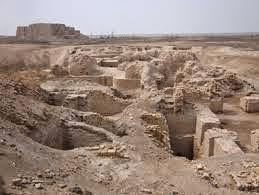
Close to temple buildings at the center of the city, a garbage dump built up over centuries. Unable to use the area for building, the people of Ur started to bury their dead there.

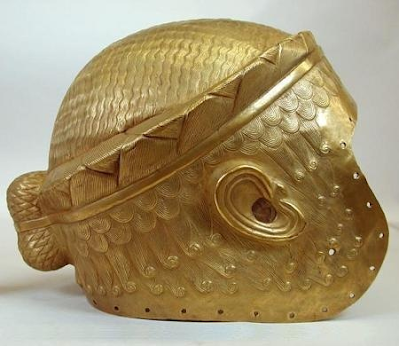
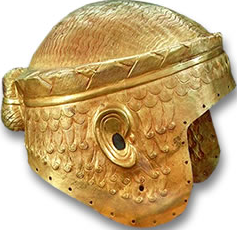
Gold Helmet of Sumerian King Meskalamdug

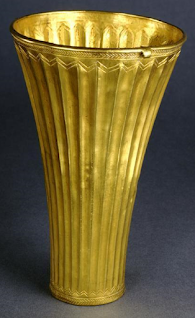
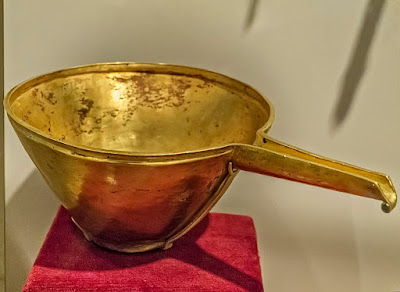
Electrum drinking tumbler.

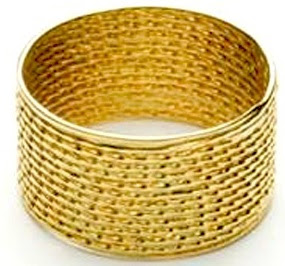
Queen Pu-abi's gold ring
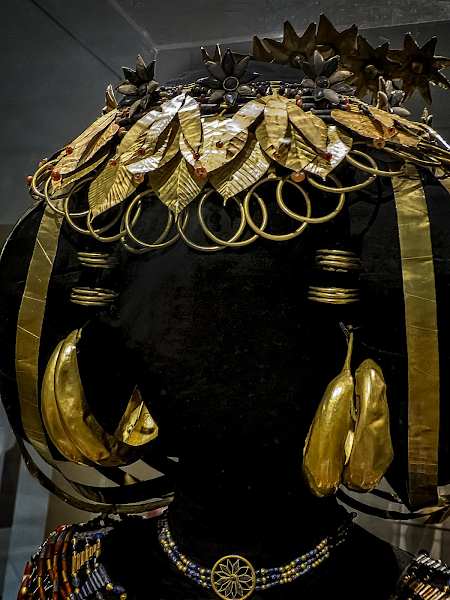
The cemetery was used between about 2600-2000 BC. Many graves were very rich. The tomb of Pu-abi was excavated along with some 1800 other graves at the "Royal Cemetery of Ur" between 1922 and 1934.
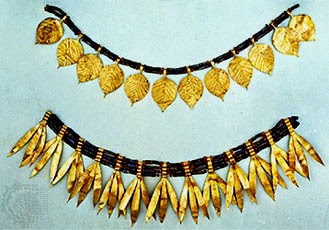
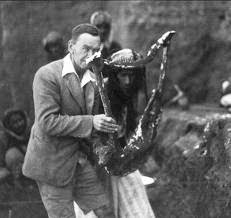
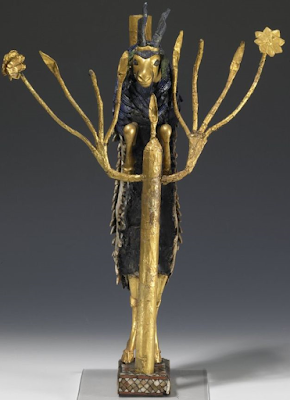
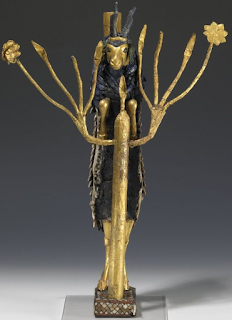
Pu-abi's tomb was unique because of the large amount of high quality and well-preserved grave goods and because her tomb had been untouched by looters through millennia. Along a wall, three lyres and a harp deteriorated by time stood still in silence.


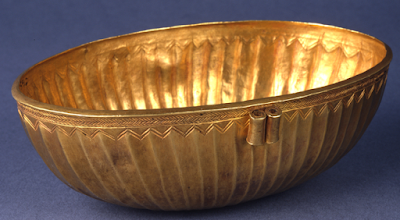
Fluted Gold Bowl from Pu-abi's tomb

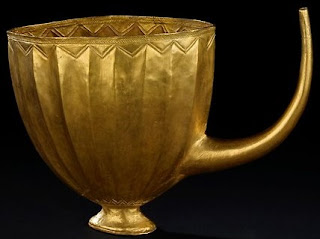
Gold spouted cup from the Royal Tomb of Queen Pu-abi

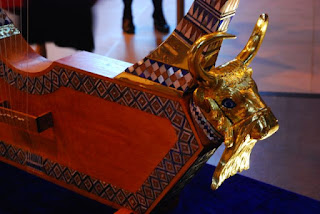
Gold and lapis lazuli bull's head was attached to a lyre.

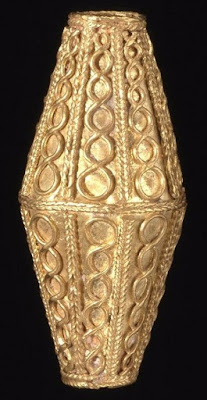
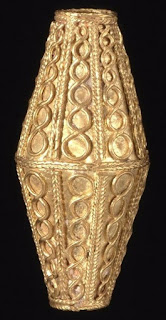
Gold bead with filigree

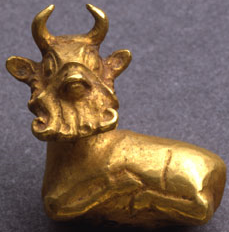
Gold bull amulet, originally part of a necklace. The bearded bull was considered divine

Saturday, March 15, 2025

Gold of the Royal Cemetery of Ur

Ur was an important Sumerian city-state in ancient Mesopotamia, located at the site of modern Tell el-Muqayyar in southern Iraq. Although Ur was once a coastal city near the mouth of the Euphrates on the Gulf, the coastline has shifted and the city is now inland, south of the Euphrates, 16 kilometres (9.9 mi) from Nasiriyah.

Electrum drinking tumbler.
The city dates from 3800 BC. According to one estimate, Ur was the largest city in the world from c.2030 to 1980 BC. Research indicates that the area was struck by severe drought from 2200 to 2000 BC.
Close to temples at the center of the city, a dump built up over centuries. Unable to use the area for building, people buried their dead there. The cemetery was used 2600-2000 BC. Many graves contained rich materials. The tomb of Pu-abi was excavated along with 1800 others at the "Royal Cemetery of Ur" between 1922 and 1934.
Pu-abi's tomb was unique because of the large amount of high quality and well-preserved grave goods and because her tomb had been untouched by looters through millennia. Along a wall, three lyres and a harp deteriorated by time stood still in silence.

Gold Helmet of Sumerian King Meskalamdug

Fluted Gold Bowl from Pu-abi's tomb

Queen Pu-abi's gold ring

Gold and lapis lazuli bull's head was attached to a lyre.

Gold bull amulet, originally part of a necklace. The bearded bull was considered divine

Gold spouted cup from the Royal Tomb of Queen Pu-abi

Gold bead with filigree