Wednesday, June 11, 2025

Vale of Glamorgan hoard

In 2014 a hoard of silver coins including those issued by Roman general Mark Antony were discovered in a Welsh field more than 2,000 years after they were buried.
The 91 coins were found by a metal detector near the village of Wick, Vale of Glamorgan. They were buried in a small pot. The coins were issued by Roman rulers spanning 200 years, with the earliest dating to 31 BC. This was the last year Antony appeared on Roman coins. Each coin represents about a day’s pay, making the hoard a significant sum.
The hoard is only a mile as the crow flies from that of another second century silver hoard found at Monknash in 2000, which compromised 103 denarii. It was buried around 150AD.

The newest coins bear the image of Marcus Aurelius, who ruled 161 AD to 180 AD. The value of the treasure is split equally between the finders and the landowner.

Tuesday, June 10, 2025

Treasure of Villena

The Treasure of Villena is one of the greatest hoard finds of gold of the European Bronze Age. The hoard was found in December 1963, 5 kilometres from Villena. It comprises 59 objects made of gold, silver, iron and amber with a total weight of almost 10 kilograms, 9 of them of 23.5 karat gold. This makes it the most important find of prehistoric gold in the Iberian Peninsula. A pair of corroded objects might be the most precious of all.
A dull bracelet and a rusted hollow hemisphere decorated with gold are forged with iron from a meteorite. They suggest that metalworking technology and techniques in Iberia more than 3,000 years ago were far more advanced than thought. In the Iberian Peninsula, the Iron Age didn't start until around 850 BCE. The problem is that the gold materials have been dated to between 1500 and 1200 BCE. Iron ore from Earth's crust is not the only place source of malleable iron. Pre-Iron Age iron artifacts around the world were forged from meteorites. The most famous is the meteoritic iron dagger of Pharaoh Tutankhamun.
The iron pieces are the oldest found in the Iberian Peninsula and correspond to a stage in which iron was considered to be a precious metal, far more valuable than gold, and so was hoarded. Iron from meteorites has a much higher nickel content than iron found on earth. Mass spectrometry was used to determine their composition. In spite of the high degree of corrosion, which alters the elemental makeup of the artifact, both the hemisphere and the bracelet were made from meteoritic iron.

Monday, June 9, 2025

Roman sarcophagus uncovered in Caesarea

A spectacular find, and the first of its kind in Israel: A Roman period marble sarcophagus was uncovered, upon which was sculpted a special scene of the drinking contest between Dionysus and Heracles (Hercules). After restoration, the scenes have been fully revealed: In the center Dionysus, the god of wine, and around him a retinue of a host of mythological characters such as Maenads, satyrs, Hermes, Pan, lions and tigers. This sarcophagus offers an unusual perspective of the idea of death - not as an end, but as the beginning of a new path.

Sunday, June 8, 2025

Gladiators: Heroes of the Colosseum

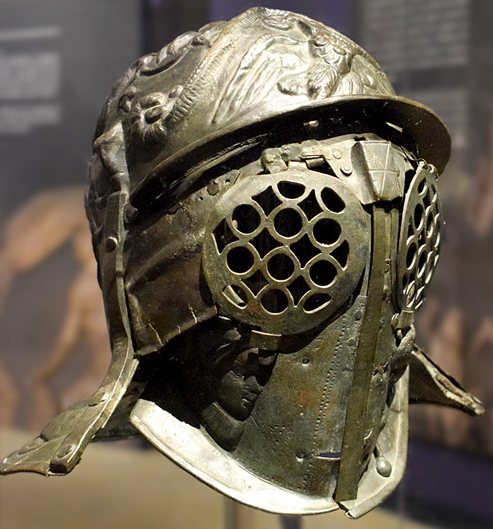
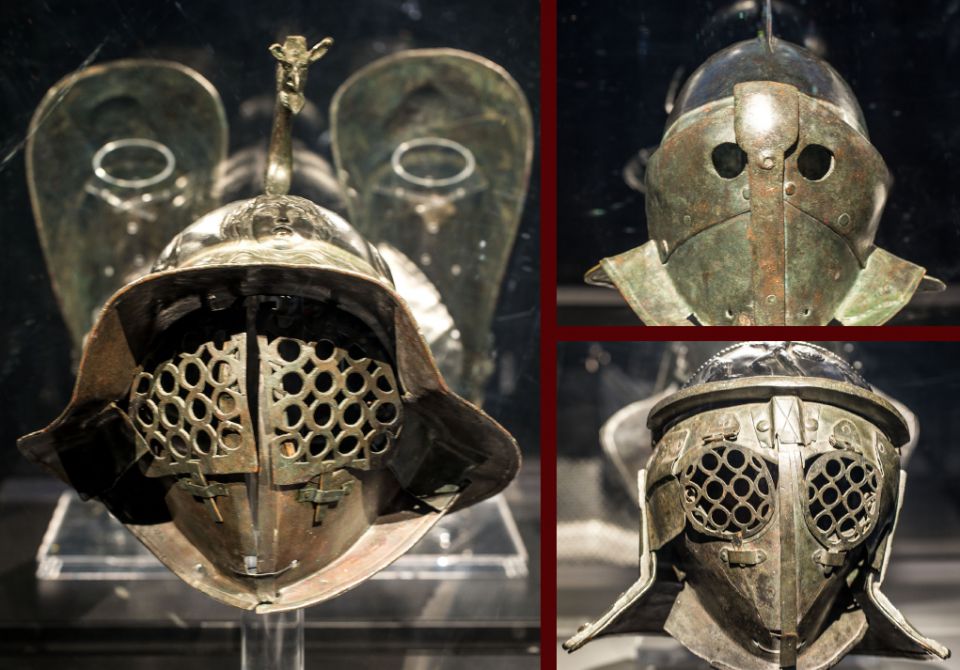
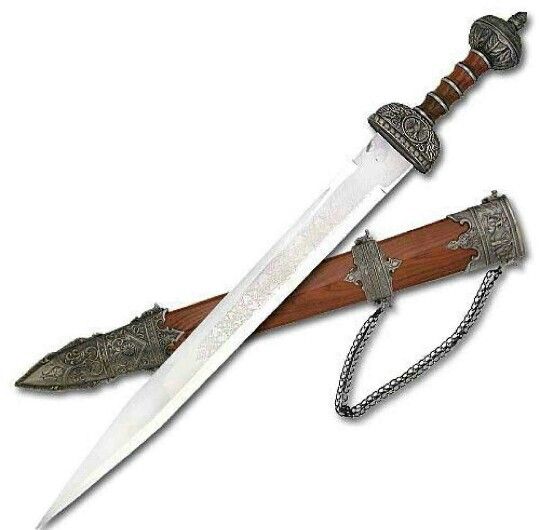
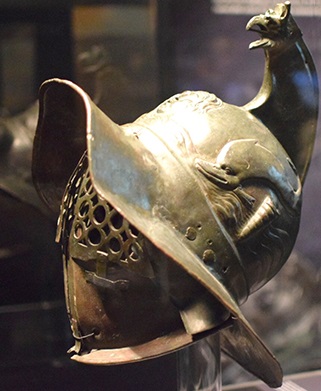
An exhibition started touring the world in 2017. It offered a glimpse into the world of the ancient gladiators. “Gladiators: Heroes of the Colosseum” brought one of the most famous and violent traditions of ancient Rome to life with more than 100 artifacts, replicas and displays. Many of the exhibition’s artifacts are being displayed for the first time outside of Italy
Gladiators from the Zilten Mosaic. There were different types of gladiators: the Thraex, the Provocutor, the Hoplomachus, the Murmillo, the Secutor, the Retiarious, and many others depending on the time period and location. Each type had a specific style of armor and specific weapon or set of weapons.

Valkyries: Chooser of the Slain


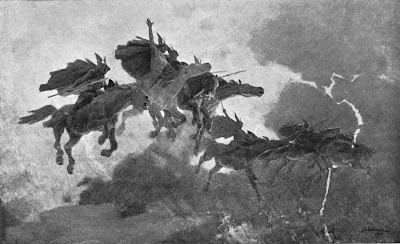
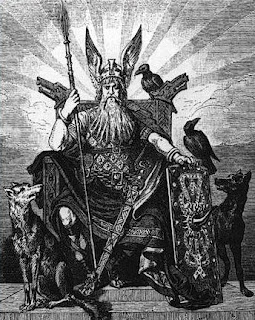
Between the 3rd and 11th centuries, the perception of the Valkyries changed and they became associated with Odin.
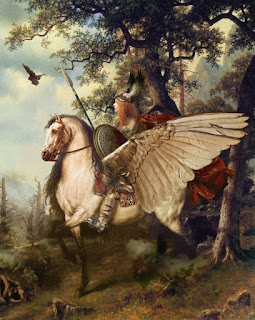
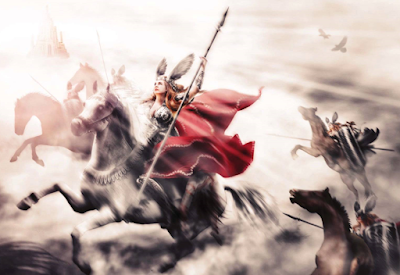
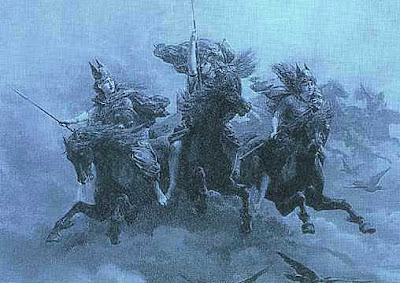
In Norse mythology Valkyries are female warlike virgins, who are mounted on horses and armed with spears. They decide who will die in battle and hover over the battlefield. In ancient Norse mythology, before they were linked to Odin and Ragnarok, the Valkyries were sometimes represented as carrion-eating ravens. The original Valkyries, appearing on battlefields as soon as the fighting was over, would weave tapestries from the intestines of slain warriors and feed corpses to their pet wolves.
On the battlefield the Valkyries chose the souls of the bravest slain warriors to become Einherjar, soldiers to fight for Odin at Ragnarok, the final battle between the gods and the giants. Half of those who die in battle would go to Valhalla. The other half will go to the goddess Freya’s afterlife field Folkvangr. Once in Valhalla the dead warriors became Einherjar. Inside Valhalla the Valkyries wore simple white robes and served the Einherjar. They would remain the Einherjar's servants until Ragnarok.
Valkyries were Odin's bodyguards and messengers.
Mortals saw their flickering armor and light streaming from their spears. The northern lights (aurora borealis) were the Valkyries flying across the night sky. The Ride of the Valkyries is a term for the beginning of Act III of Die Walküre, by Richard Wagner. Valkyries usually appeared in groups of nine.

Thursday, June 5, 2025

Imperial tomb of the Wari

The Wari lords have been overshadowed by the later Inca. But in the 8th and 9th centuries A.D., the Wari built an empire that spanned much of present-day Peru.

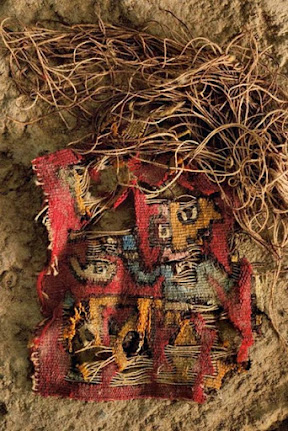
A winged creature adorns an ear ornament worn by an elite Wari woman.
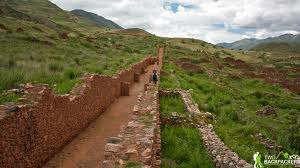
Their Andean capital, Huari, became one of the world's great cities. At its zenith, Huari boasted a population estimated at about 40,000 people. Paris, by comparison, had just 25,000 residents at the time. The capital at Huari is located at an altitude of 2800m extending over 15 square km.
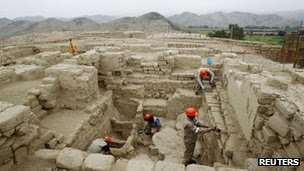
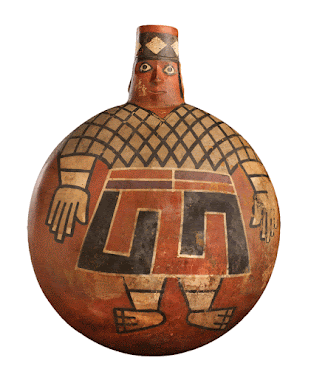
In 2014 more than 60 skeletons were found inside a tomb, including three Wari queens. They were buried with gold and silver jewelery and painted ceramics.

Mummified bodies were sitting upright - indicating royalty.
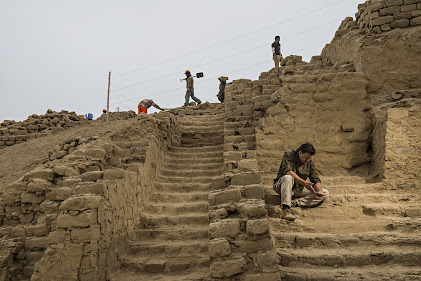
The tomb was found in El Castillo de Huarmey, about 280km north of Lima. Researchers say the way other bodies were positioned indicated they were human sacrifices. Six of the skeletons in the grave were not in textiles.
They were placed on top of burials in strange positions.
Archaeologists found the remains of the Wari queens, gold, ceramics and skeletons to be about 1,300 years old. The Wari civilization thrived from the 7th to 10th centuries AD, conquering all of what is now Peru before a dramatic decline that remains unexplained.

Wednesday, June 4, 2025

Laestrygonians

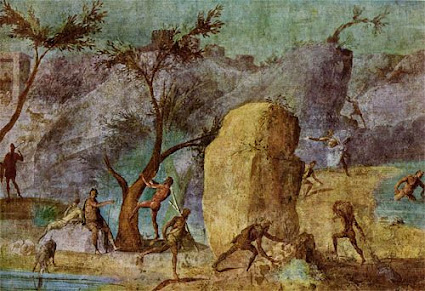
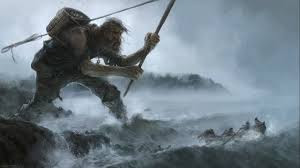
The Laestrygonians are a tribe of man-eating giants from ancient Greek mythology.
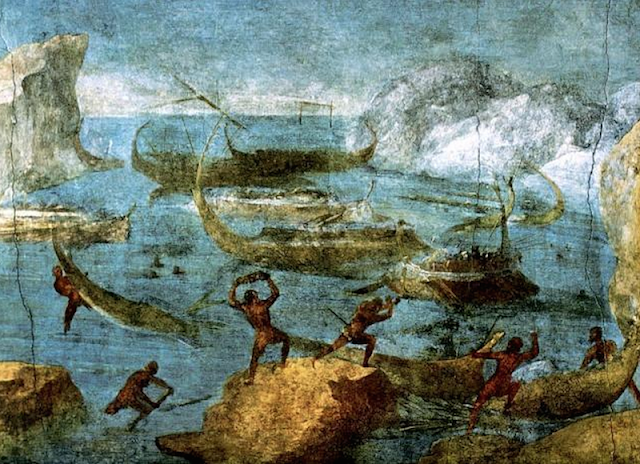
Odysseus visited them during his journey back home to Ithaca. Odysseus had departed the battlefield of Troy with his twelve ships intact, and with the help of Aeolus had even managed to come within sight of Ithaca. The greed of his own men though, had seen disaster fall, as his ships were blown back to the realm of Aeolus. Odysseus's men rowed for six days and nights until they reached landfall. 11 of Odysseus's 12 ships anchored there. Odysseus kept his ship outside the harbor.
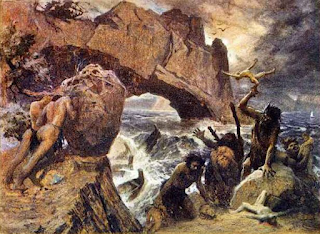
With no idea where they were, Odysseus sent out three of his men to scout. The giants ate them. They destroyed eleven of his twelve ships by launching rocks from high cliffs. Odysseus's ship wasn't destroyed as it was hidden in a cove. Only his vessel and crew survived. It is with this one ship that Odysseus put in to the island of Aeaea, having lost his whole army.
The Laestrygonians were 8 foot-tall cannibal giants with heavily tattooed arms. They had yellow pointed teeth. Under their clothing is leather armor and they carry iron clubs.

Tuesday, June 3, 2025

Gabriel’s Horn


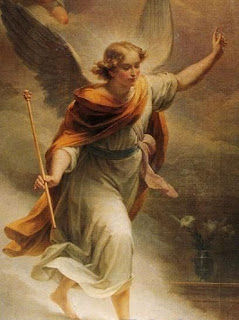
Archangel Gabriel’s name means 'God is my strength'.
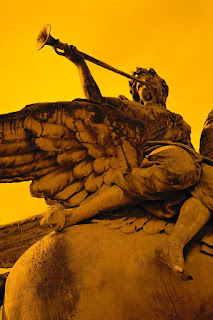
Gabriel is one of two archangels specifically named in both the Old and New Testament. She is often portrayed holding a trumpet and is the only female archangel.
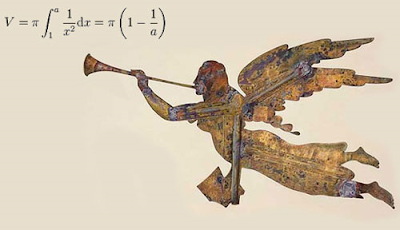
Gabriel's horn is a geometric figure which has infinite surface area but finite volume.

Archangel Gabriel is the messenger angel.
The mathematical name refers to the tradition identifying the Archangel Gabriel as the angel who blows the horn preceeding Judgment Day. Gabriel blowing a trumpet blast to indicate God's return to Earth is popular culture though the Bible never specifies Gabriel as the trumpeter.

Gabriel is one of only 3 angels named in the Bible.
Torricelli’s Trumpet, or Gabriel’s horn, is a staple of calculus textbooks. It may also be the perfect imaginary musical instrument: an object constituted by its precise mathematical description, yet impossible – due to its infinite length – to exist.