Tuesday, October 7, 2025

The Gjermundbu Helmet

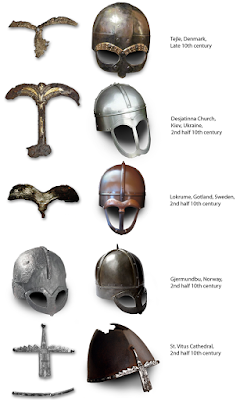
On March 30 1943, during World War II in Nazi-occupied Norway a rich discovery was made.
A burial mound on a farm in Ringerike contained the burnt remains of two males and 76 different objects. They were placed in a wheelbarrow and hidden from the Germans. Among the objects was a Viking helmet. 80 years after its discovery, the Gjermundbu helmet is still very special. Many Viking warriors used helmets, but only two survived enough to be reconstructed. The Gjermundbu helmet was found in nine fragments and restored.
The helmet was made some time between the years 950 and 975 and was part of a high status burial. A sword, pieces of chain mail, and stirrups from the Gjermundbu burial.
The helmet was made of iron and was in the shape of a peaked cap made from four plates.

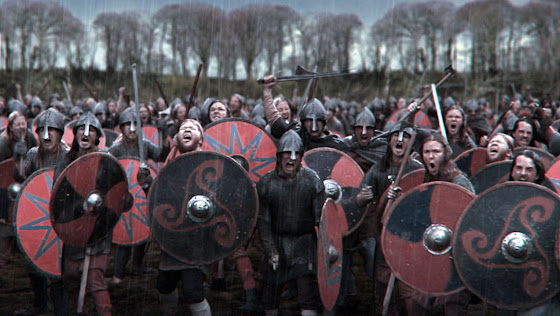
The helmet remains the first and only known helmet dating back to the Viking era. Research indicates that Vikings rarely used metal helmets. Despite popular culture, there is no evidence that Vikings used horned helmets in battle.

Sunday, October 5, 2025

Expensive Ancient Statues at Auction


In 2002 the sale of the statue broke the world auction record for an antiquity sale (of that time) after selling for nearly $12m at Christie’s London.
The Jenkins Venus: $11.7m. The Jenkis Venus, also known as the Barberini Venus is a copy of the Aphrodite of Knidos statue, which is was one of the most famous works of Praxiteles, an ancient Greek sculptor.


Considered the most important Cycladic idol ever to come to auction, the Cycladic reclining female figure with an estimated value of $3-5m, was sold by Christie’s for a jaw-dropping $17m in December of 2010.

Bronze Figure Of A Tapir: $12m. This bronze figure is a preeminent example of Chinese figurines of the 4th century B.C. The bronze figure portrayed a pig-like mammal that became extinct in China about 10,000 years ago.
The statue depicting Leda and the swan was discovered around 1775 in Rome, and is a Roman replica of a Greek statue from about 300 B.C. The statue was sold by Sotheby’s New York for over $19m.

The sculpture, ‘Roman Bust of Antinous’, was sold by Sotheby’s in 2010 for almost $24m.

Artemis and the Stag: $28.6m. Artemis and the Stag, was the highest priced statue ever sold at the time (2007).
Found near Baghdad, Iraq, the Guennol Lioness is a 5,000-year-old limestone Mesopotamian statue. The sculpture was described by Sotheby’s as “one of the last known masterworks from the dawn of civilization remaining in private hands.” The sculpture portrays an anthropomorphic lioness-woman and was sold for $57.2m in 2007

$60k to $90k
On December 8, 2015 Sotheby's presented a sale dedicated to ancient Egyptian sculpture and works of art, the first auction of its kind in recent memory.

Highlights include a fine small-scale basalt bust of King Tuthmosis III, an imposing over-lifesize fragmentary red granite head of King Amenhotep III from the last ten years of his reign, and a monumental granite enthroned figure of the goddess Sekhmet, once the property of John Lennon

Black Basalt Head Of Tuthmosis III, 18th Dynasty, 1479-1426 B.C. $200k to $300k

Wood mask with inlaid eyes, 25th/26th Dynasty. $300k to $500k

Limestone mask, 30th Dynasty/early Ptolemaic Period. $200k to $ 300k

Granite enthroned figure of the goddess Sekhmet. $3m to $5m

Statuette of the Lady Iset , priestess of the god Sobek, dating to the early 19th Dynasty. $600k to $900k

A record for an ancient Egyptian work of art was set at Christie’s in 2012 when a 29 inch sculpture of the goddess, Isis, dating from the Late Period Dynasty, c 664 - 525 BC, sold for £3.7m.
A 30-inch statue representing the god Sekhemka broke the world record for highest auction price of an Egyptian artwork in 2014. The statue was estimated to sell for $7 to $11m, but sold for $27m. The Sekhemka statue is a tomb model of a high official, wearing a short kilt and tight-fitting wig, surrounded by his wife, son and seven offering-bearers. He holds a papyrus on his knees on which are inscribed a list of offerings designed to serve the needs of the dead, including beer and cakes.

An Egyptian Green Peridotite Head of a Man

Egyptian blue-glazed steatite figure of Taweret, goddess of childbirth

Block statue of a man and the sacred baboon of Thoth, Egyptian, serpentine, 26th/30th Dynasty, 664-342 B.C. Sold for $856,000 in 2006

Sphinx of Egyptian queen, green porphry, Roman Imperial, circa A.D. 81-96. $5,234,500.

Egyptian steatite figure of Sobek

Djehuty-Mose (Tothmes), polychrome limestone ushabti, Egyptian 19th Dynasty,1292-1190 B.C. $1,314,500

Black granite or basalt relief fragment from the 30th Dynasty/Early Ptolemaic Period, reign of Nectanebo II /Ptolemy I, 360-282 B.C. $211,500 in 1998

Limestone figure of lion, 30th Dynasty/Ptolemaic Period, 380-30 B.C. $154,250 in 2001.

Friday, October 3, 2025

4,500 year-old gold and jade — from ancient Troy

The city at the heart of Homer’s Iliad and the Trojan War resided between myth and history until the ruins of Troy were discovered in Hisarlık, Turkey in the late 1800s.
In the beginning ages of Troy, the city served as the capital of Troad and was the residence of the king and his various family, officials and staff. The rest of the population lived as farmers outside the city, taking refuge inside a city citadel in times of conflict. The city grew over the centuries, eventually becoming home to settlers and horse-raisers, before being struck by a devastating earthquake just after 1300 B.C. There are nine 'layers' of Troy, researchers found, and during recent excavations on the layer between Troy I and Troy II, a few improbable pieces were discovered. This layer dates to about 4,500 years ago, to the Early Bronze Age.
Archaeologists uncovered a gold brooch and piece of jade. The brooch is one of only three known similar pieces in the world.
Jade and gold were luxury items exclusive to the elite at the time.

The Troy likely described by Homer was the later Troy VIIa, later destroyed by the Greeks of Agamemnon, in what was called the Trojan War.
Troy VII is often subdivided into two different phases, Troy VIIa and Troy VIIb, as a major destruction event occurred between 1220 B.C.-1180 B.C. that demarcates two very different phases. After the city of Troy VI was destroyed by an earthquake around 1300 B.C., a much different settlement developed at the site.

Thursday, October 2, 2025

Rare Roman Gold

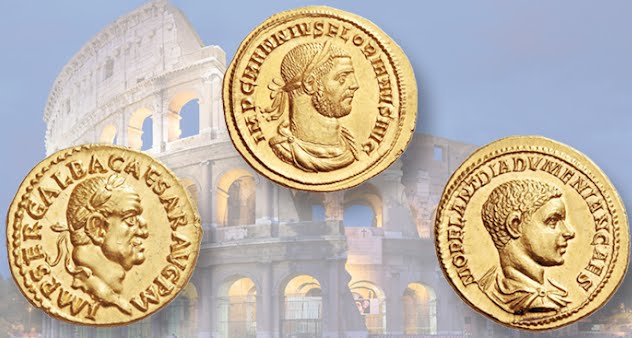
A trio of rare Roman gold aurei led bidding at Numismatica Ars Classica’s auctions in Zurich in 2018.
The coins were issued for some of the shortest-serving leaders of the Roman Empire. Galba’s reign as emperor was from July 68 to January 69, and a gold aureus that was “virtually as struck” was the top lot in the sale. It made $256k. Another rarity is a piece struck for the son of emperor Macrinus. The aureus of Diadumenian Caesar, struck late in 217, realized a hammer price of $239k. A gold aureus of Florian issued in Cyzicus in 276 A.D. realized a hammer price of $229k.

Sunday, September 28, 2025

Ulpius Cornelius Laelianus

A Roman coin minted for an ill-fated emperor was found in 2019 during road work. It is only the second of its kind to be unearthed in England. It depicts Ulpius Cornelius Laelianus, who reigned for several months in AD269. Ulpius Cornelius Laelianus was a usurper against Postumus, the emperor of the Gallic Empire. His revolt lasted from late February to early June 269 at which point he was executed.
A fake Ulpius Cornelius Laelianus areus. During his brief reign as Emperor of the Gallic Empire, Laelianus issued two types of gold aurei and at least three types of alloy antoniniani (about 4% silver) coins.
Another unusual coin discovered during the dig was a Gallic War Uniface coin, minted in 57BC by the Ambiani tribe in the Somme area of modern-day France. Experts believe it was exported to help fund the British Celtic resistance to Julius Caesar.

Friday, September 26, 2025

Gold coin hoard speaks of Galilee Christian city’s demise


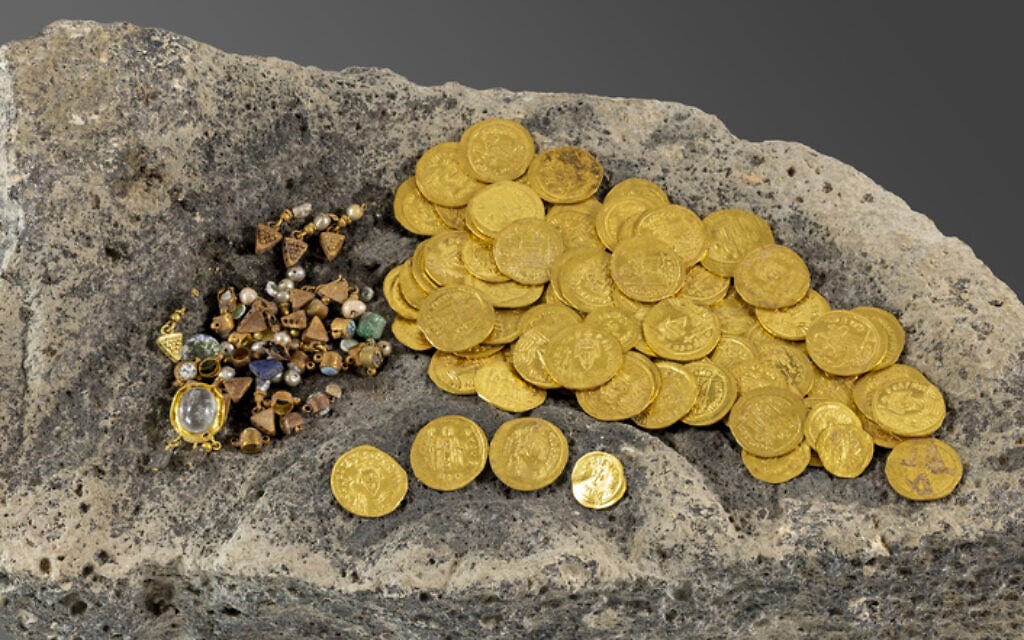
Nearly 100 gold coins and dozens of jewelry fragments have been unearthed in an excavation at the ancient city of Hippos, east of the Sea of Galilee. The hoard was buried during the final years of the Christian Byzantine era (early 7th century CE), as the Sassanid (Sasanian) Empire swept into Israel in 614 CE. Stashed by an extremely wealthy resident as the Sasanids advanced on the city, the treasure lay undisturbed for some 1,400 years before being uncovered by pure chance. Hippos was founded by Greek Seleucids on the eastern shore of the Sea of Galilee in the 2nd century BCE. During the Byzantine period (330 CE-636 CE), Hippos became an important Christian town. It endured the Arab conquest in the 7th century until a devastating earthquake in 749 CE leveled the city, which was then permanently abandoned.
It is a Byzantine hoard and can be dated with precision. It spans roughly a century, beginning with Emperor Justin I [518–527 CE] and ending in the early reign of Emperor Heraclius [610–613 CE]
One of the hoard’s unique features is its mix of denominations: while some coins are solidi — full-value coins weighing 4.45 grams — others are semisses, worth half a solidus, or tremisses, a third of a solidus.
Hippos-Sussita site at the Sussita National Park.

Hippos likely persisted as a Christian settlement but gradually declined until the earthquake of 749 delivered the final blow.

Saturday, September 20, 2025

Ancient ‘Texas Serengeti’ had rhinos, alligators, 12 kinds of horses

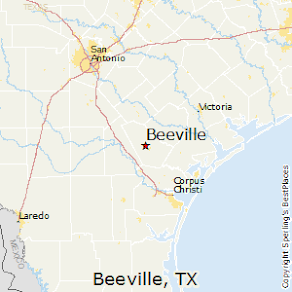
From 1939 to 1941 a federal agency that provided work to millions of Americans during the Great Depression put unemployed Texans to work as fossil-hunters. They dug up tens of thousands of specimens from sites near Beeville, Texas.
For the past 84 years the fossils have been stored at the University of Texas at Austin and virtually forgotten.
The fossil trove of nearly 4,000 specimens represent 50 animal species, all of which roamed the Texas Gulf Coast around 12 million years ago.
Among the finds was a new genus of gomphothere, an extinct relative of elephants with a shovel-like lower jaw.
Other fossils include the American alligator and an extinct relative of modern dogs.

Ancient Egyptian Tomb found with spectacular art

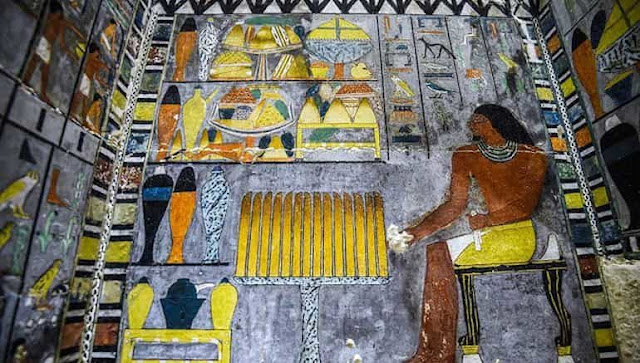
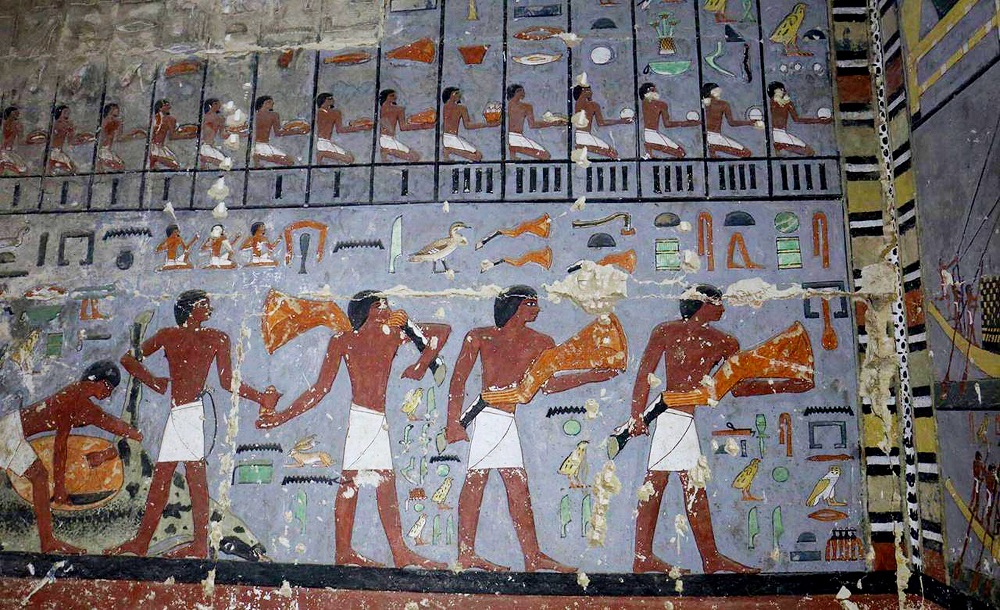
In 2019 researchers discovered a 4,300 year old tomb belonging to a high-ranking official covered in colorful reliefs and well-preserved inscriptions.

The tomb dates to the Fifth Dynasty, around 2400 BC.
Saqqara, where archaeologists made the discovery, once served as the necropolis for the Egyptian capital of Memphis. It's located on the west bank of the Nile, 15 miles south of Cairo.