Sunday, November 23, 2025
Monday, November 17, 2025
1,400-year-old royal tomb in U.K.
![]() A painted wooden box fragment | An underground chamber discovered by road workers appears to be the site of the earliest Christian royal burial ever found in Britain. Researchers are calling it the Anglo-Saxon equivalent of King Tutankhamun's tomb. The chamber was uncovered between a road and a railway line in the southeastern English village of Prittlewell in 2003. | ![]() |
Sunday, November 16, 2025
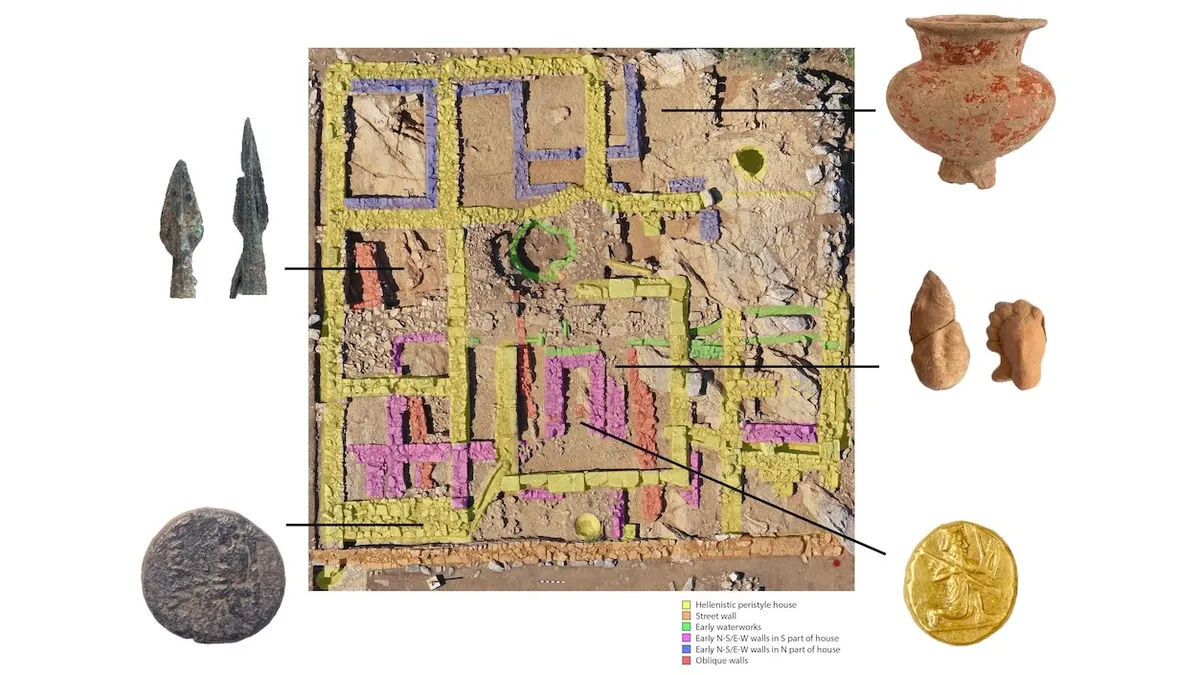
Pot of gold coins discovered in ancient Greek city
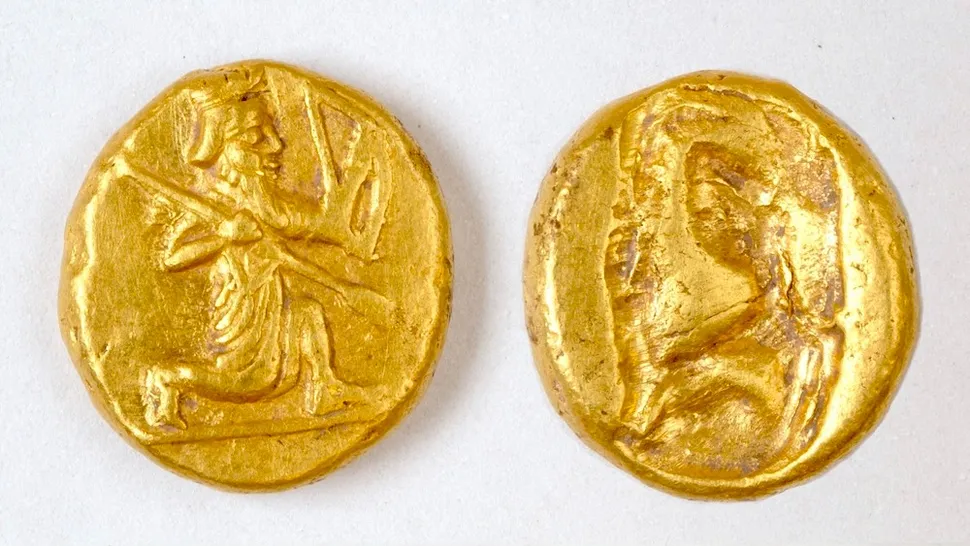
![]() | A pot full of gold coins was found inside a room beneath a home in Notion, an ancient Greek city in western Turkey in 2024. Notion is a well-preserved and almost completely unexplored ancient city. The discovery of such a valuable find is extremely rare. The darics were likely minted in Sardis, located 97km northeast of Notion sometime during the fifth century B.C. According to the Greek historian Xenophon, a single daric was equivalent to a soldier's pay for one month. |
| The Hellenistic period occurred after the death of Alexander the Great in 323 B.C. and lasted until the conquest of the final Hellenistic kingdom by Rome in 31 B.C. During the sixth century B.C., Notion was incorporated into the Persian Empire along with other Greek cities. In the early fifth century B.C., it was freed from Persian rule. Between 430 and 427 B.C., a group of Persian sympathizers, as well as Greek mercenaries, occupied Notion. Athenian general Paches killed Persian mercenaries and expelled Persian sympathizers. Its thought the hoard was left behind. | ![]() |
![]() | Notion was at the epicenter of the tumultuous period of the last few centuries BCE and 1st century CE, when many settlements of Ionia and adjacent regions were re-founded, moved to new locations, or incorporated into other communities (synoikism). |
Friday, November 14, 2025
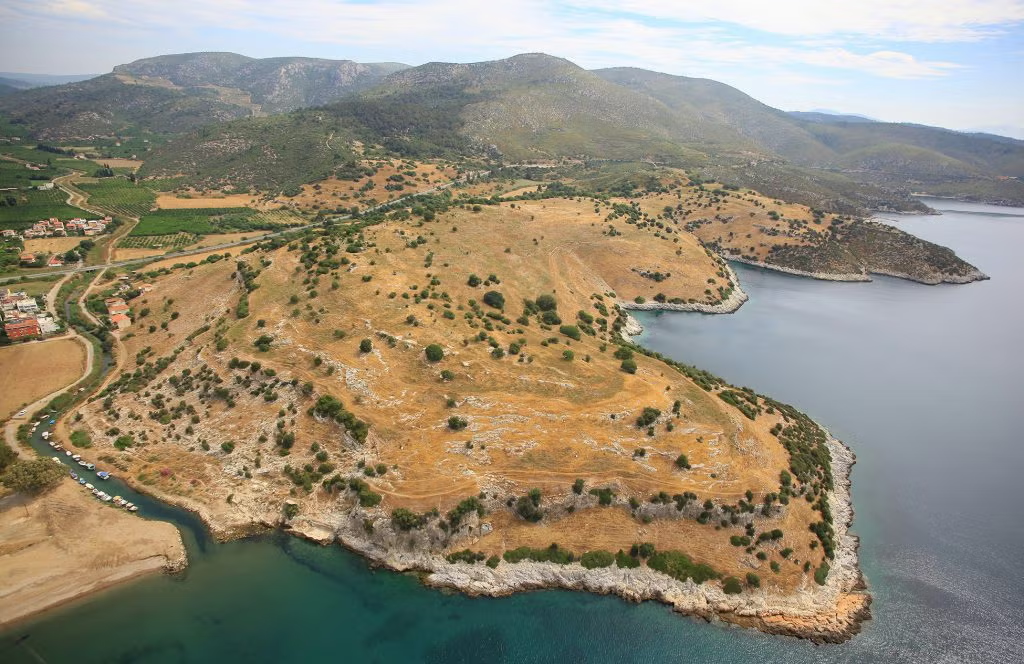
Ancient Greek City Bargylia for Sale - $7m
The Ancient Greek city of Bargylia, dating back to the 5th century BC and located in Asia Minor near Gulluk Bay on the northern coast of the Bodrum Peninsula, has been on the market for at least ten years. The initial price of 22 million Turkish Liras ($10 million USD at the time) was repeatedly reduced. It remains privately owned by multiple shareholders, as it has been since 1927.
The ancient city of about 81.5 acres has been falling into disrepair. “We hear the sounds of treasure hunters at night, but we cannot do anything out of fear” a local said.
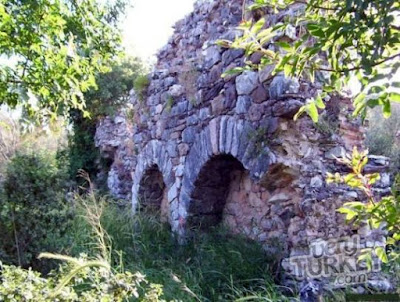
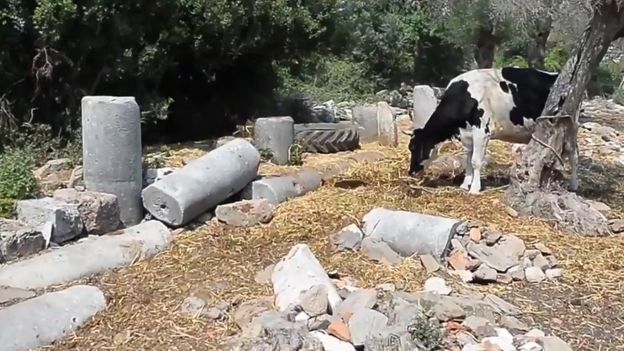
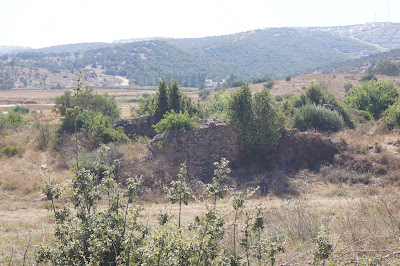
There are extensive ruins at Bargylia, including the remnants of a temple, a theatre, a defensive wall and a palaestra. | The ancient city of Bargylia was said to have been founded by Bellerophon in honour of his companion Bargylos, who had been killed by a kick from the winged horse Pegasus. Bargylia was an important religious center, famous for the Temple of Artemis Kindyàs. Artemis Kindyàs and Pegasus often appeared on the city’s coinage. | ![]() |
![]() | The city is a Grade 1 archaeological site. A newspaper reported that since no buyer had been found the price has been dropped again. | ![]() |
Wednesday, November 12, 2025
Treasures from Heracleion
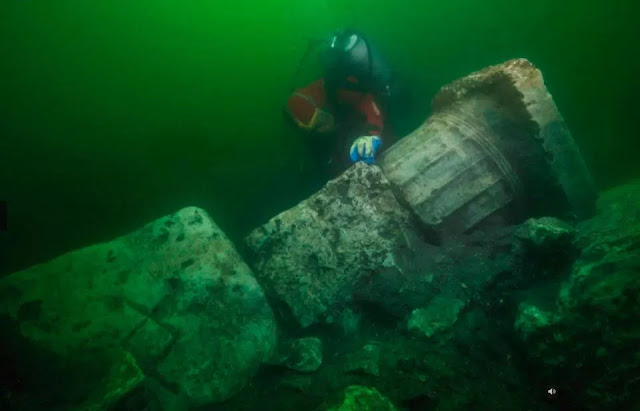
Heracleion was located off Egypt's north coast. It slumped into the sea some 1,200 years ago and was lost for centuries until divers rediscovered it in 2000. Archaeologists announced a series of new finds at the underwater site.
![]() | A temple and shipwrecks with treasure has been discovered among the ruins of an ancient sunken city described as the "Egyptian Atlantis". Ancient columns, 2,000-year-old pottery and bronze coins from the reign of King Ptolemy II (283 to 246 BC) were also found. | ![]() |
![]() | Located at the entrance to the Nile, the city was Egypt's main international trading port, sporting statues, temples and a maze of canals. Buried under centuries of silt, the ruins and artifacts are perfectly preserved thousands of years later. | ![]() |
Monday, November 10, 2025
Foo Fighters - Hitler's Stealth Fighter
The term 'Foo Fighter' was used by Allied aircraft pilots in World War II to describe various UFOs or mysterious aerial phenomena seen in the skies over both the European and Pacific theaters of operations.
![]() Though "foo fighter" was named by the U.S. 415th Night Fighter Squadron, the term was also commonly used to mean any UFO sighting from that period. | ![]() |
![]() | Formally reported from November 1944 onwards, witnesses often assumed that the foo fighters were secret weapons employed by the enemy. The Robertson Panel explored possible explanations, for instance that they were electrostatic phenomena similar to St. Elmo's fire, electromagnetic phenomena, or simply reflections of light from ice crystals. | ![]() |
![]() | The Horten Ho 229 – “Hitler’s Stealth fighter” was the first “flying wing” aircraft with a jet engine. It was the first plane with design elements, which can be referred to as stealth technology, to hinder the effectiveness of radar to detect the plane. In 1943, the head of the German Luftwaffe, Hermann Göring, presented what is known as the '3 X 1000' goal. Goring wanted a plane that could carry 1000 kg of bombs (2,200 lb), with a range of 1000 km (620 miles), at a speed of 1000 km/h (620 mph). Work on the next prototype version of the plane, the H.IX V3, ended when the American 3rd Army’s VII Corps on April 14, 1945 reached the Gotha plant in Friederichsroda. |
| The only remaining Horten Ho 229 known was restored at the Steven F. Udvar-Hazy Center. The H.IX’s wings were made from two carbon injected plywood panels adhered to each other with a charcoal and sawdust mixture. Engineers at Northrop tested a non-flying reproduction and found the design gave about a 20 percent reduction in radar range detection over a conventional fighter of the day. | |
![]() | ![]() | ![]() |
![]() | ![]() | ![]() |
![]() | ![]() |
![]() | ![]() |
Sunday, November 9, 2025
How gold flowed through the Nile
| A study published in the Journal of Archaeological Science has, for the first time, quantified the profitability of gold mining in antiquity. The research, focused on the gold mining operations of the Egyptians during the New Kingdom in the rich lands of Nubia. Extracting the precious metal was a remarkably lucrative business, mainly thanks to very low labor costs. Using mathematical models, researchers analyzed four different mining methods. All of them, except one, generated windfall profits.They are 1) Oxidized Lode Mining, 2) Primitive Alluvial Prospecting, 3) Nile Alluvial Prospecting, and 4) Alluvial Clast Mining. The most profitable method was alluvial mining in wadis. The explanation lies in efficiency. Alluvial methods are simple: auriferous gravel is dug up and washed to separate the heavy gold particles. This requires relatively few processing steps. | ![]() |
![]() | Lode and clast methods require dedicating a large portion of the labor force to the arduous tasks of crushing and grinding rock to release the gold. This diverts labour from extraction, reducing productivity. |
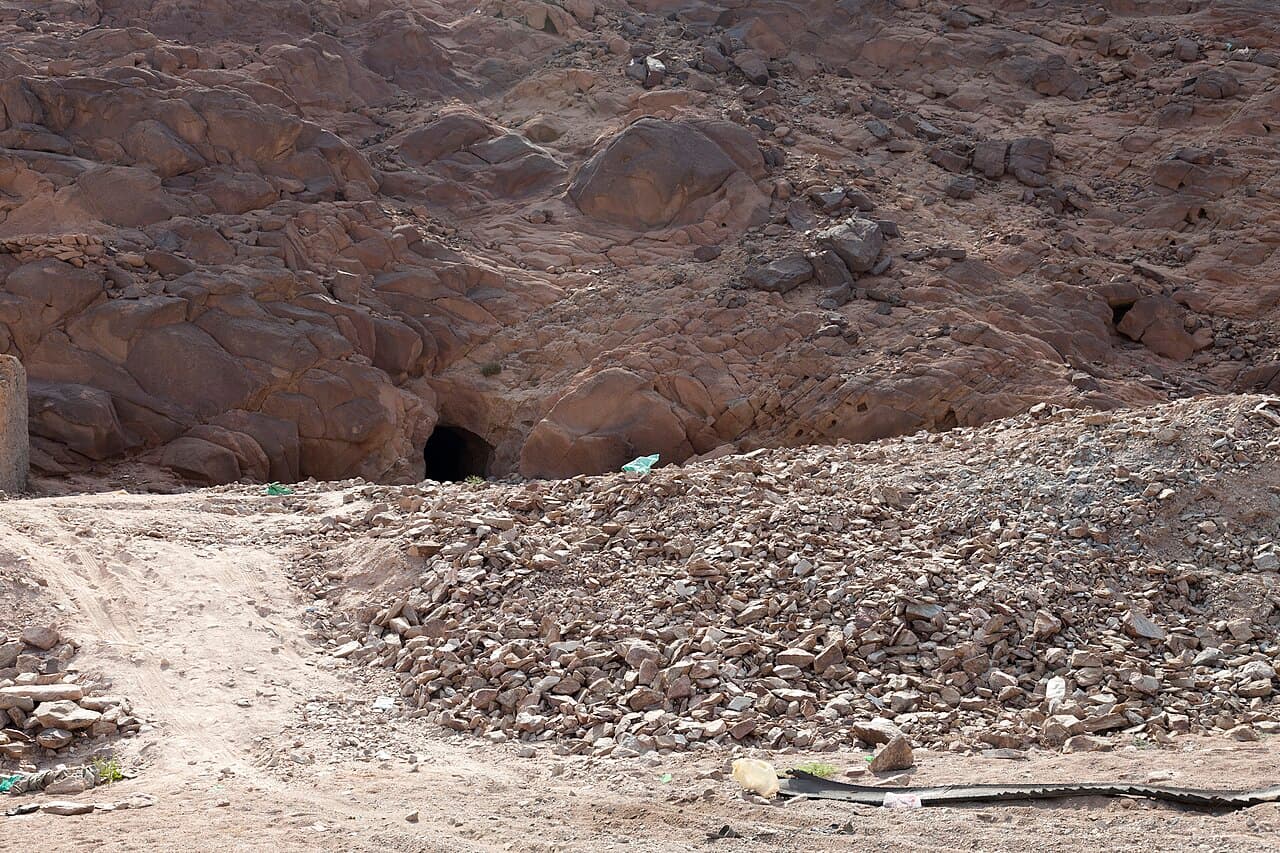
| One of the study’s most important findings is the potential for large gains for the “first arrivals” at a virgin deposit. New Kingdom Egyptians, during their expansion into previously unexplored Nubian lands, might have encountered alluvial deposits with concentrations of 2 or 3 grams of gold per ton of sediment (common in virgin deposits). Profitability skyrockets. | ![]() Ghozza mining settlement in Egypt. |
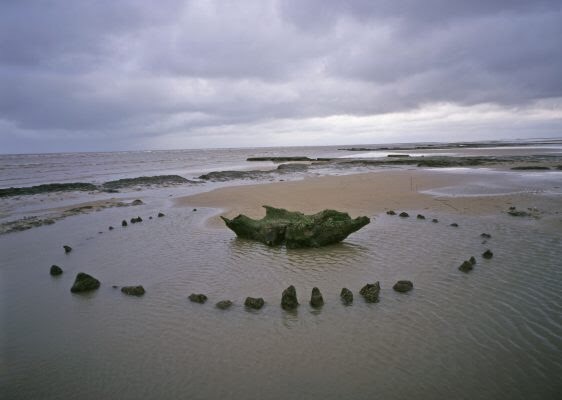
Seahenge
Seahenge, also known as Holme I, was a prehistoric monument located in the village of Holme-next-the-Sea, near Old Hunstanton in the English county of Norfolk. In order to preserve the timber from exposure to air, due to recent exposure of the remains by the sea, it was excavated in Spring 1999. Its remains were taken to an archeological museum and then a maritime museum for preservation of the wood. In 1999, a reproduction was put up near the site.
Seahenge was constructed during the early Bronze Age. Those constructing the monument made use of at least fifty different bronze axes, which were used to shape the timber to the desired lengths and shapes, at a time when bronze tools were relatively rare. Trees used in the monument had all been felled in the same year, 2049 BC. Seahenge was inland, and then over eons came to being on a beach, where it was revealed by the eroding away of sand and peat by the late 20th century, four thousand years after its original construction.
| In 1998, a man walking along the beach at Holme-next-the-Sea stumbled upon a Bronze Age timber circle that had emerged overnight from East Anglia’s shifting sands. The 55 posts circling an upside-down tree is a relic from 2050 BC. In the centre of the ring was a large inverted oak stump. At the time of building, the site was surrounded by salt marshes. The centrepiece may have been a ceremonial altar from which bodies could travel to the afterlife. |
Thursday, November 6, 2025
Celtic gold 'Rainbow Cup' unearthed near Leipzig

Weighing a mere two grams and half the size of a modern penny, the 2,200 yo coin is almost pure gold (about 99%). It features a stylized animal head, likely that of a stag. The reverse depicts a torc, with thickened ends, surrounding a five-pointed rounded star and a small sphere. It is classified as a Celtic quarter stater, dated to the 3rd century BCE, and was likely minted in northern Bohemia, one of the main Celtic centers at that time.
![]() | In Celtic culture, torcs symbolized nobility, divine power, and protection. Their presence on coins indicates that they served not only an economic but also a social and ritual purpose. |
Subscribe to:
Posts (Atom)


There are extensive ruins at Bargylia, including the remnants of a temple, a theatre, a defensive wall and a palaestra.