Sunday, March 15, 2026

Florida treasure hunters find $4.5m in lost gold

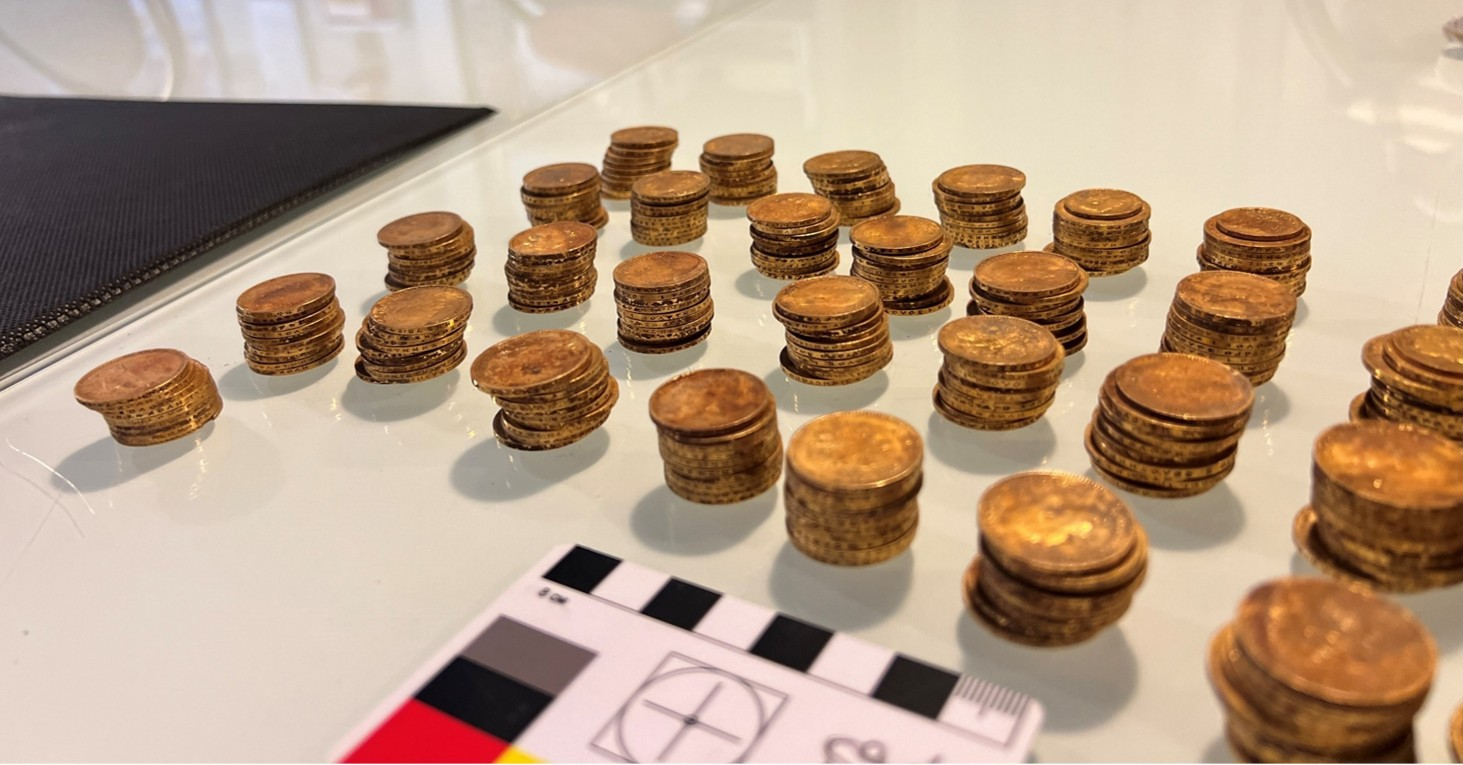
In 2017 a team of treasure hunters recovered a $4.5m bounty of gold coins in shallow waters off Florida. The treasure consisted of 350 gold coins, including nine rare "royal" eight escudo pieces. A Royal 8 escudos is a perfectly struck Spanish colonial gold coin, often produced with special dies for presentation, weighing 27 grams of 0.875 fine gold. These are high-quality "cob" coins featuring rounded flans, ornate crosses, and royal shields.
The coins contain 0.76 to 0.81 troy ounces of pure gold.
The "royal" is the pinnacle of Spanish colonial numismatics. The production of a Royal was a careful, thoughtful process. Few cob 8 escudo Royals were minted due to the time and resources it took to make them.
The find was made off the coast of Vero Beach, Florida in 3 feet of water. Bret Brisben, captain of the S/V Capitana and his crew found the treasure 15 feet from shore.
Brisben’s find comes a month after one of his subcontractors, Eric Schmitt, found 52 gold coins worth more than $1 million. Schmitt found the gold while diving about 150 feet off the coast of Fort Pierce in Florida during his yearly treasure-hunting trip with his wife, his sister and his parents.

The New Forest Hoard

The New Forest Hoard, 63 gold coins and one silver, was found by a family digging a flowerbed in a clump of soil in April 2020 near Milford on Sea, Hampshire. A further six gold coins were then unearthed following an archaeological excavation in the garden after the hoard was appraised at the British Museum and deemed treasure in October 2021. Most of the coins are of a type known as “angels” for the design on the obverse of the archangel Michael slaying a dragon with a cross-shaped spear. First minted under Edward IV in 1465, angels were the standard gold coin in Britain for two centuries.
The coins had been estimated to fetch about £230k were sold at auction for just over £380k.
The earliest coin found was struck in the 1420s in the reign of Henry VI and the latest 1536-37 from Henry VIII. The coins are in five different denominations. The hoard was thought to have been buried in the 1530's. The most valuable single coin was a Henry VIII crown of the double rose from 1536-1537. It sold for over £17,000, more than three times its pre-sale estimate.
The Double Rose minted between 1536 and 1537 was struck in 22-carat gold ("crown gold"), which was a shift from the previous 23-carat standard. 91.67% pure gold, 2 carats alloy, usually copper or silver. Weight was about 57.5 grains (3.73 grams).
When it was buried the hoard was a substantial fortune with a probable purchasing power over £500k today. Experts believe the New Forest Hoard represented a family’s savings and was buried to keep it safe from political turbulence around the dissolution of the monasteries after Henry VIII’s break with Catholicism in 1533.
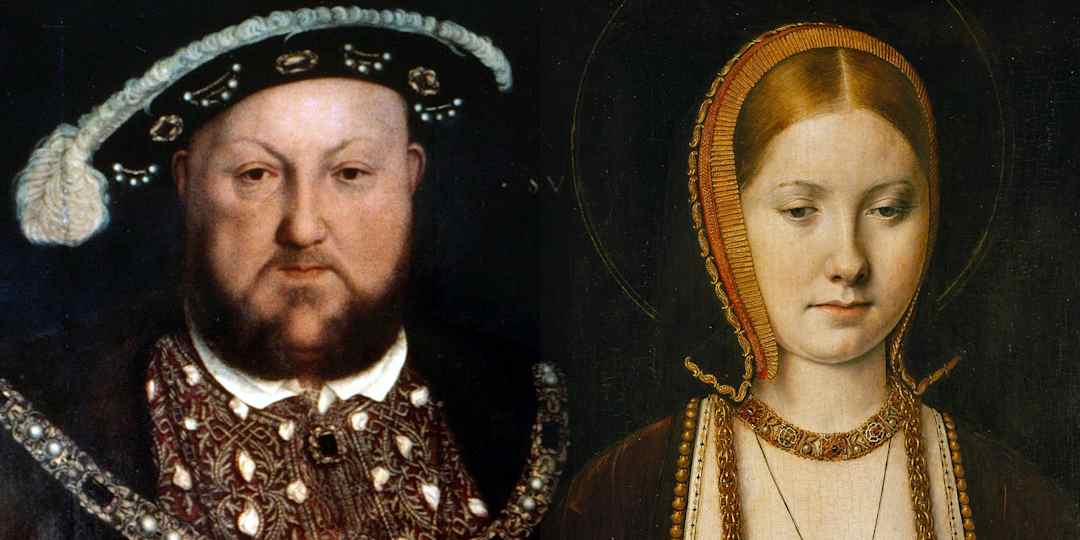
Four of the gold coins bear the initials of three of the wives of King Henry VIII. The first three of the six, K for Catherine of Aragon, A for Anne Boleyn and I for Jane Seymour. The one with Jane’s initial is the earliest coin in the hoard.

Saturday, March 14, 2026

Gold from ancient Panama - the Coclé

For more than a thousand years, a cemetery on the banks of the Rio Grande Coclé in Panama lay undisturbed, escaping the attention of looters.
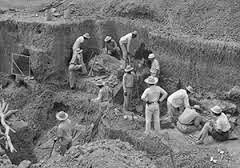
The river flooded in 1927 scattering gold beads along its banks. In 1940, Penn Museum archaeologist J. Alden Mason excavated at the cemetery, unearthing spectacular finds.

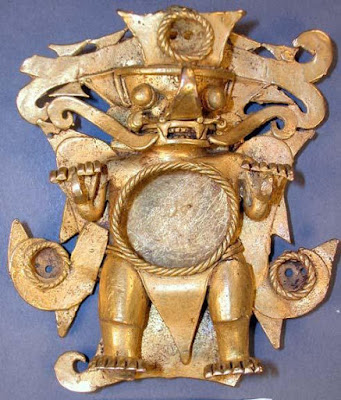
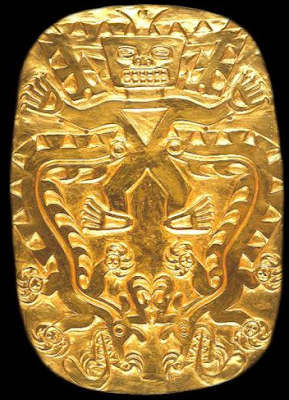
Human effigy pendant of gold, copper, silver alloy, Sitio Conte, Panama, ca. 700-900CE.
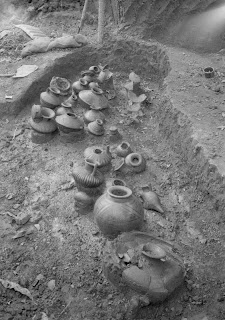
Large golden plaques and pendants with animal-human motifs were found, precious and semi-precious stone, ivory, and animal bone ornaments, and literally tons of detail-rich painted ceramics.

It was evidence of a sophisticated Precolumbian people, the Coclé, who lived, died, and painstakingly buried their dead with their gold.


Long overshadowed by research on other indigenous Central and South American peoples, the Coclé, who lived from about 700 to 900 CE, remain mysterious.

Friday, March 13, 2026

The Torzhok hoard

The Torzhok hoard consists of 409 imperial Russian coins that were hidden in an earthenware mug underneath a house floor. The gold ruble coins were found underneath a house in the city of Torzhok, about 260 miles (420 kilometers) southeast of St. Petersburg, northwestern Russia. The 409 coins were minted during the waning days of the Russian Empire.

In total, the coins in the hoard add up to 4,085 rubles, a substantial sum. The melt value of one 10-ruble coin — which is 90% gold — is over $1,300
A pit in the foundation contained the broken remains of a glazed earthenware mug, known as a candyushka, filled with 409 coins minted between 1848 and 1911. The hoard consisted of 387 gold 10-ruble coins, 10 coins each of 5 rubles, 10 coins each of 15 rubles and two 7.5-ruble coins.
The Russia 10 rouble gold coin issued during the reign of Nicholas II immortalizes the end of the House of Romanov. It contains .2489 oz of pure gold. The obverse depicts Nicholas II, the last czar of Imperial Russia. Reverse is the Imperial Coat of Arms, along with the seal of His Tsarist Majesty: a shielded double eagle, with crowns that represent Russia, Kazan and Astrakhan.
Two coins were minted during the reigns of earlier czars (Nicholas I and Alexander III), the rest come from the reign of Czar Nicholas II, the last Russian emperor before the Russian Revolution of 1917. Nicholas and the rest of the royal Romanov family were executed in 1918.

Crusader gold in Israel


The 400-gram hoard consists of gold dinars and quarter-dinars.
A hoard of buried gold coins found in Apollonia National Park in 2012 by a joint team of archeologists from Tel Aviv University and the Nature and Parks Authority is one of the country's largest-ever such finds. The hoard of 108 gold coins were minted in Egypt about 250 years before being buried in the floor of a 13th century fortress at Apollonia Park, about 15 miles north of Tel Aviv.
The coins were minted in Tripoli and Alexandria.
The coins date to the Fatimid empire, and are 200-300 years older than the ruined fortress they were found in.
Researchers believe the cache of coins was hidden to prevent Muslim conquerors from finding it. The Christian Order of the Knights Hospitaller ruled the fortress and the surrounding city .
The Order of the Knights of Saint John, Order of Hospitallers, Knights Hospitaller, and the Hospitallers, were among the most famous of the Roman Catholic military orders during the Middle Ages.

The excavations offer insight into Crusader fortifications in the Middle East. The layer of Crusader artifacts has lain nearly undisturbed since 1265. Muslim Arsuf was conquered by the Crusaders in 1101 and re-conquered by the Mamluks in 1265.

Baibars’ reign marked the start of an age of Mamluk dominance in the Eastern Mediterranean.
In March 1265, Mamluke Sultan Baibars stormed the city and captured it after 40 days of siege. The knights were annihilated.

Baibars (1223 – 1 July 1277) was the fourth Sultan of Egypt from the Mamluk Bahri dynasty.

Thursday, March 12, 2026

UK gold quarter stater

A Celtic quarter stater was found in Ulverston in 2017. It is from around 115 to 100 BC and could have been lost or buried at a time of approaching military turmoil. Julius Ceasar was the first to bring a Roman army to Britain in 55 and 54 BC but he got no further than Kent and the Thames Valley. A permanent conquest began by Cladius from 43 AD led to the building of forts, ports, towns and farms which were to last for hundreds of years. The Guildhall Museum at Rochester in Kent has a hoard of 11 gold staters found packed inside a hollow fossil flint sponge which had been buried in Kent.
The museum display noted: "Staters can be described as coins but are not currency - they do not have a uniform, recognized monetary value. They were a way of storing treasure and of rewarding people."

Wednesday, March 11, 2026

The Chimera


The Chimera of Arezzo, bronze, Etruscan, 5th century BC
In Greek mythology the Chimera was a monstrous fire-breathing hybrid, composed of the parts of more than one animal. It is usually depicted as a lion, with the head of a goat arising from its back, and a tail that ended with a snake's head. It was thought to be one of the terrifying offspring of Typhon and Echidna and a sibling of such monsters as Cerberus and the Lernaean Hydra.

The sighting of a Chimera was a certain omen for disaster. Homer's description in the Iliad: "a thing of immortal make, not human, lion-fronted and snake behind, a goat in the middle, and snorting out the breath of the terrible flame of bright fire."
The Chimera was defeated by Bellerophon with the help of Pegasus. Since Pegasus could fly, Bellerophon shot the Chimera from the air in safety. Homer adds that Bellerophon finished the Chimera off by equipping his spear with a lump of lead that melted when exposed to the Chimera's fiery breath.

Ancient gold in Staffordshire

The Leekfrith Iron Age torcs are a set of four gold items discovered in December 2016 in Staffordshire, England. They are believed to be the earliest Iron Age gold jewelry found in Britain, dating to about 400–250 BC.
The find was made on farmland in the parish of Leekfrith. The hoard contained four torcs – three necklaces and bracelet – which would only be worn by the elite.
The decoration on the bracelet is thought to be some of the earliest Celtic art from Britain.
This discovery was found 45 miles north of the famous Staffordshire Hoard.